

Provide school meals.
Keep children in school.

School meals stopped 15-year-old Faith from becoming a child bride
Like many girls in her community, she was at risk of leaving school and being married off too soon, not because she wanted to, but because it would ease the burden on her family. Her dream of becoming a teacher almost slipped away. Until the day, her school was supported with school meals.
“I come to school because I will get food. If you stay home there is no food.”
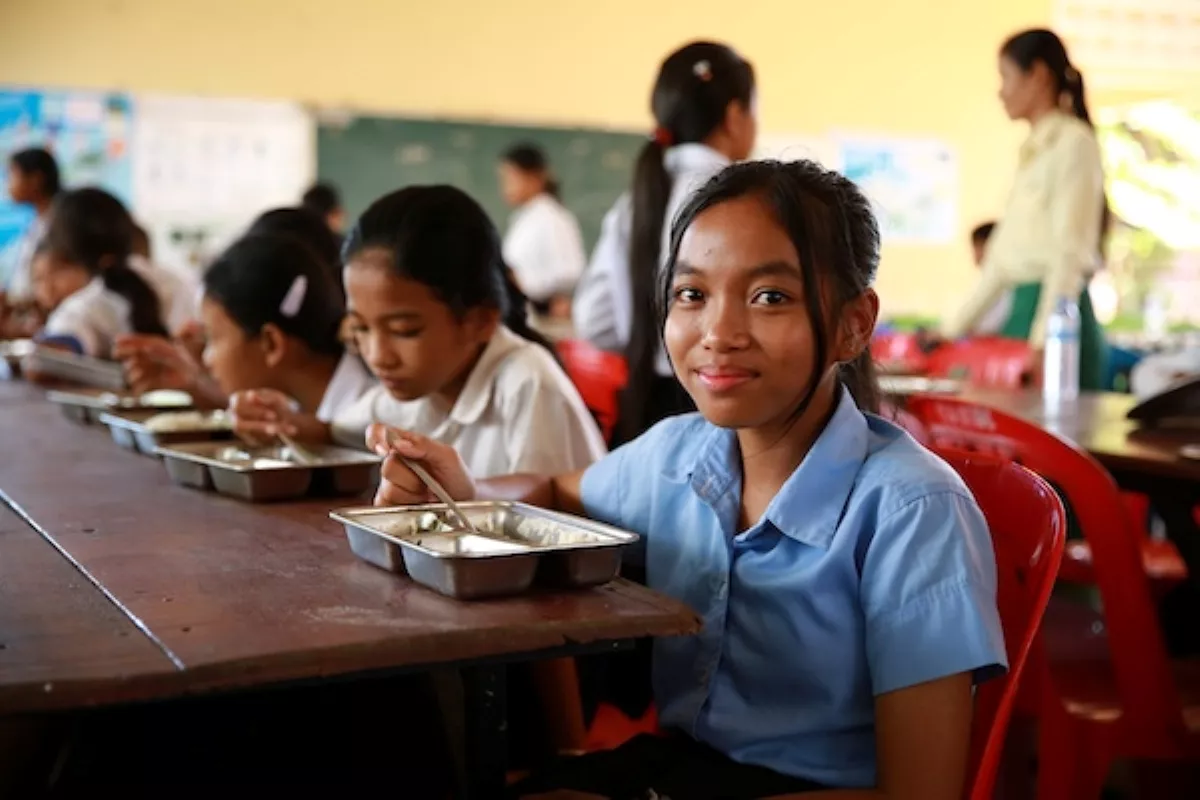
School meals filled 13-year-old Chandy’s classroom with life
She looks forward to not just her lessons, but also the school meal that will carry her through the day. Especially, her favourite fried rice which has vegetables such as carrots and beans. Her classroom no longer has empty seats, as more children like her come to school.
“If I become a Prime Minister, I would support children with two meals.”
Provide school meals. Keep children in school.

Cambodia
Children struggle to stay in school in rural areas where poverty and food insecurity make daily attendance difficult.

Zambia
Hunger has been the greatest barrier to education, families survive on farming for food are affected by climate shocks.
Why school meals?

For Health & Nutrition
School meals are helping prevent malnutrition, providing the much-needed nutrients the children’s growing bodies need.

For Education
School meals give children a reason to show up and stay in school, leading to more years of quality education.

For Families
School meals can offset 10–20% of annual food expenditure, providing relief that helps families focus on other needs.

For Girls
When school meals are available, families are likely to send girls to school, protecting them from being married early.

For Communities
School meals made using locally sourced ingredients, support farmers & local food systems which strengthens livelihood.
What goes into a school meal?
Prepared with care and locally sourced ingredients.

Rice / Maize
A staple that provides energy for the day.

Fish / Beans & Soy
Sources of protein that support growth, strength and brain development.

Vegetables & Fruit
Rich in vitamins that strengthen immunity.

Eggs & Meat
Provide essential nutrients like iron to prevent fatigue and support development.

Vegetable Oil
Adds healthy fats that help the body absorb nutrients.

Fortified Nutrients
Added vitamins and minerals that help fill nutritional gaps.

